
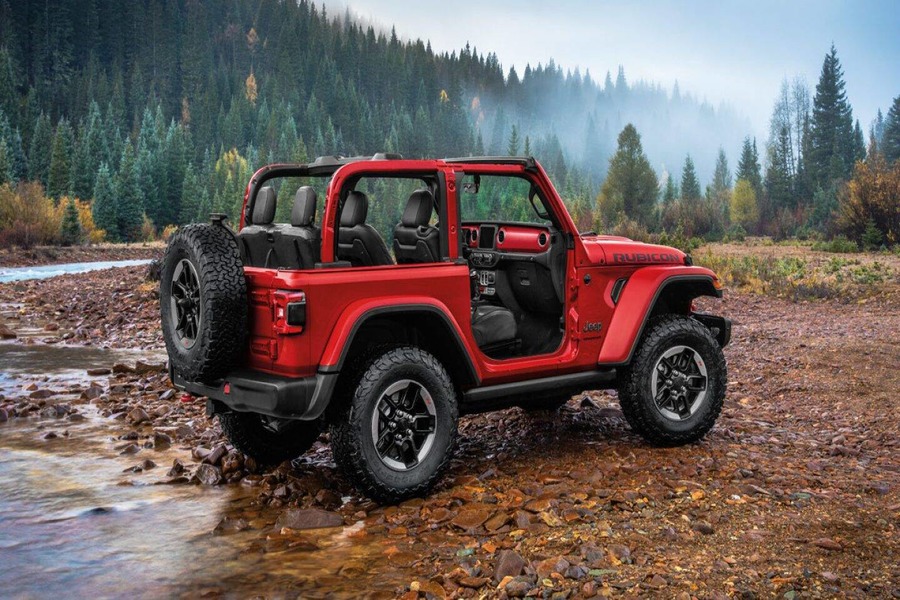
“How much does it cost to lift a Jeep?” There’s a pretty common saying out there that definitely applies to Jeep lovers. Men don’t grow up; their toys just get bigger. Let’s be honest, nobody buys an off-road vehicle, such as a Jeep, to go to and from work. Nobody drives a Jeep to haul groceries around, and they certainly don’t use it for its questionable fuel efficiency. No. People drive Jeeps for one reason and one reason alone — to explore. To go literally anywhere.
With all this being said, it shouldn’t be surprising that these oversized toys can be expensive. After all, buying a Jeep outright isn’t the end of the story. To actually get to the cooler places, you rock rails. You’ll need skid plates, locking differentials, stronger axles, bigger and way more aggressive tire setups, and so much more.
Lifting a Jeep Overview
To start off, raising a Jeep is quite difficult. It’s definitely nowhere near as easy as just slapping a few parts together and tightening a few bolts. It takes a lot of planning, preparation, and man-hours.
It will also cost you quite a pretty penny. There are dozens of kits out there to choose from, but so many owners out there just don’t know how to choose. Should you be missing the relevant experience, who will you hire to get it installed? That’s right, the cost of the actual kit and tools isn’t enough. Installation costs still exist!
What Are Jeep Wrangler Lift Kits?

Most people know that lift kits raise a vehicle higher into the air, but most don’t really know what they actually are. What is happening underneath the vehicle to obtain that result? In simple terms, a lift kit is anything that lifts the cab of your Jeep away from the road.
Options include a suspension lift, where control devices and other parts are strengthened and extended. It could also be a body lift, meaning the body is slightly raised off the frame. Each kit will be different, so be sure to review what you’re buying before checking out. Based on your needs, certain kits will be better suited for you than others.
Why should I buy a Jeep Lift Kit?
Jeep Wrangler lift parts are usually bought to challenge a lot of goals. Some of them include:
- Clearance (how much room there is between the cab and the road) — if you want to drive over big rocks or through deep mud, you’ll need lots of high clearance;
- Sightlines — you will be positioned much higher off the ground, and be able to see over other cars (a lot of people prefer this for when they’re in traffic or going over very rough terrain);
- Bigger wheels — they are great because you can get more aggressive tread, which, of course, allows for cooler and better off-roading ability;
- Cool factor — most people add lift kits simply because they look cool (and they’re not wrong, lift kits look awesome).
Regardless of what you’re told by your fellow owners, a lift is definitely not a necessity. There are plenty of owners who don’t add a lift at all. Frankly, if you’re not planning on doing crazy offroading or getting large wheels, you may not even want one. And that’s okay.
Choosing the right lift kit
When choosing a lift, you need to factor in your needs. What do you want to do with this lift? Why do you want it? Will it be just for looks, or should it be tough enough to tackle even the mightiest of trails?
Another factor you’ll definitely want to think about is your budget. What dollar amount are you willing to spend on this lift kit? What’s your maximum amount? Lift kits can be expensive, so you’ll need to plan accordingly. For example, changing the height of your truck may require new mudflaps to keep it road legal, or you might need new rims, new wheel setups, and more.
Body Lifts

As mentioned earlier, a body lift moves the body of your Jeep a few inches off your frame. It’s super cheap (around $200). All a mechanic needs to do is insert blocks. Do keep in mind that body lifts tend to be the lowest you can get in terms of height. Since you’re not changing your suspension components and only adding blocks, it can get a little tricky after just 2 inches of lift.
Stock pieces are designed to work at a specific height. 2 inches is within the range, but anything more is not. If you lift it higher anyway, your parts are going to wear out quickly and break very easily.
We really want to make clear that body lifts are not what you need if you’re planning on off-roading. Yes, you can fit bigger wheels because of them, and they do look good, but your frame (or the bottom of your Jeep) won’t be any higher off the ground. Chances are, if you add bigger wheels, it will only give you an extra inch of lift.
Budget Boost Lift
This particular option isn’t necessarily a real lift kit. Instead, it’s more of a boost, costing typically $200-400. By putting an extension on your existing components, you can achieve up to 2 and a half inches of lift. Most have the appropriate accessories and accompanying parts.
For example, in some kits, you may get sway bars that have been extended. In others, you may get brackets for your brake lines. Similarly to a body lift, if you lift too much, you may cause quite a bit of damage.
Since you’re only boosting certain parts, instead of replacing your entire suspension, your stock suspension components will now have to handle the strain of new angles. Unfortunately, you won’t get a fantastic amount of strength out of this kit like our next options. It does, however, let you put on some larger wheels. On the JK models, you can actually fit 33” tires with a boost. Pretty darn good if you ask us!
Suspension Lift Kits

Suspension lift kits are by far the best way to get that extra clearance and off-road ability. The previous options were more additions, but suspension lift kits are more of an upgrade. Why?
- It will raise the frame upwards instead of just the body;
- Since you’re upgrading all of the components, you’ll only experience normal wear and tear;
- These lift kits allow you to raise the vehicle more than the last two options, meaning bigger tires, more aggressive tread, and more;
- The entire system will be stronger as a whole.
So what does this type of lift kit come with? First of all, most of them are based on a shock or coil extension. Either that or a complete replacement. Alongside these parts are everything you need to make the Jeep function as it would at stock. Meaning you won’t have to worry about angle problems and such. Most of these kits will provide you with bump stops, brackets, track bars, transfer case kits, modified control arms, and more.
Suspension lift kits cost
So is this particular lift kit right for you? The first thing you’ll definitely have to do is see whether or not a suspension lift kit fits into your budget. They can be quite expensive ($1,000-$2,000), so if you don’t have the cash right now, this type of lift may not be for you.
You’re also going to have to think about how much offroading you do, as well as how difficult your trails are. If you off-road a lot, and the trails you visit are quite treacherous, we definitely recommend you get this option over the others.
One last thing to think about before buying this lift kit is maintenance and monitoring. In order for this lift to work well for you, it’s going to need constant monitoring. You’ll always need to be on the ball about correcting and tweaking certain measurements and angles. For serious off-roaders, this should be no problem.
Long Arm Lift Kits Versus Short Arm Lift Kits
A lot of customers get confused when they’re tasked with choosing between a short arm lift kit and a long arm lift kit. Here is how they’re different, along with the benefits of each:
| Criteria | Short Arm Lift Kits | Long Arm Lift Kits |
| Cost | More affordable, budget-friendly (about $1,700) | Expensive, higher parts and labour costs (around $5,800) |
| Installation | Easy to install, uses stock mounts; no welding or metalwork required | Complex install; requires cutting, welding, and new mounts |
| Lift Range | Typically 2″–6″; best ride quality under ~3.5″ | Can achieve much higher lifts while maintaining comfort |
| Ride Quality | Good at lower lifts; ride quality drops slightly above 3.5″ | Excellent ride quality at virtually any height |
| Ground Clearance & Flexibility | Strong, good clearance, flexible; great for everyday driving and light trails | Maximum clearance, extreme durability, built for hardcore off-roading |
| Durability | Durable, but relies on stock mounts; less robust than long arm | Very durable; designed for heavy trails, overlanding, and long-term reliability |
| Space Under Vehicle | Compact; doesn’t take much space | Takes up significantly more space due to larger components |
| Best For | Jeep owners on a budget who want a reliable lift without major modifications | Jeep lovers with bigger budgets who want extreme off-road performance and long-term strength |
So, the short arm parts are designed to be strong, but long arm lift kits are designed to do the possible. They’re designed to let you explore trails that are nearly impassable by any other vehicle. They make it so that you can go overlanding for weeks with little to no repair or maintenance. If you want strength, durability, reliability, and more, the long arm lift kits are for you. And that isn’t to say the short arm option isn’t durable as well. It’s just a tier lower.
Disclaimer
We would like to point out that any damage done to your vehicle after reading this article is not our responsibility. You are responsible for cross-referencing all information, as well as consulting a professional mechanic before doing any strenuous work. This article is simply a collection of the most accurate information at our disposal up to the point of publication. With that being said, everything in this article is one hundred percent accurate (to the best of our ability, of course).
Conclusion
Driving a Jeep can be fun, but driving a lifted Jeep is even better. For more information, feel free to reach out to us at any time. Our highly trained Jeep experts will provide you with the best information and advice they can muster.
As a final note to Jeep owners, make sure you note that if you get the wrong gear and go off-roading in a tough place, you may get stuck. Getting stuck leads to vehicle damage, and of course, in rare cases, bodily harm.
We recommend that you take some safety courses or at least go out with experienced off-roaders before you go off on your own. We also recommend that you always traverse with other people, rather than solo.
Safety equipment is also a definite must when offroading, for if you miss any of it, things can go very wrong. We wish you the very best. Have a great off-roading experience.
How Much Does It Cost To Lift a Jeep FAQ
What size lift do I need for larger wheels and tires on my Jeep?
Not only do bigger tires make your Jeep look better, but they’re more functional. They’ll let you traverse more terrain, like mud, sand, and even water. In some cases, your tire size may even add more lift to your vehicle!
For example, on a YJ Wrangler, you’ll need a lift of about an inch and a half in order to get 31-inch tires. On a TJ Wrangler, you’ll need a one-inch lift. For 33-inch tires, you’ll need a 4-inch lift on the YJ and a 3-inch lift on the TJ.
For 35-inch tires, you’re going to need a 6-inch lift on the YJ, and on the TJ, you’re going to need a 4-inch lift kit. You may also want to consider spaces to lessen the chance of the wheel rubbing against your wheel well.
For 37-inch tires on a TJ, you’ll need a 6-inch lift. For 37-inch tires on a JK, you’ll need 3.5 inches of lift. Both models will require about an inch of wheel spacing.
As always, Just Jeeps definitely recommend you visit your local mechanic’s shop for more information on your tires. A lot of the time, there is no standard, regardless of what models are out there. Vehicle wheel wells tend to shape and warp over time, making it very difficult to come up with an accuracy rating. Regardless, your mechanic will give you the answer you need for this one.
Do I need fenders and mud flaps after lifting my Jeep?
Lift kits can change the operating angle for a lot of different components and mechanisms. This includes the various moving parts that spit up mud and water behind the vehicle.
Typically, the mud flap or fender would catch this material before it hits the car behind you, but after lifting your Jeep, that protection becomes either minimal or obsolete. In order to protect the vehicles behind you and stay legal on the road, we recommend you invest in a nice pair of fenders and mud flaps.
How does lifting my Jeep affect the steering and speedometer/odometer?
If you change your tire size, you’ll need to get your car “updated” or “recalibrated”. If you fail to do so, your various gauges may present incorrect data, considering they’re using the same settings as your stock (or previous) set of tires.
Your steering may also need a refresh, for new parts and bigger wheels may have put the alignment off a little bit. Alignment isn’t a big issue. To put this in perspective, imagine you’re on a highway. You let go of the wheel, and the vehicle veers slightly to the right. Unless the road is angled, you should be tracking straight.
If you notice this problem on your Jeep after the lift, we recommend having a steering alignment performed. This goes for all cars on the road, regardless of whether or not you’re driving a Jeep or a Prius.
Do I need to replace my driveshaft after lifting my Jeep?
Fortunately, for most Jeep owners, the stock driveshaft on Jeep Wranglers is strong enough to handle most lift kits under a 2.5-inch lift. However, if you go above that point, you risk damaging the driveshaft. In this case, driveshaft replacement is required.